30.5.06

Book of the Month
The Delirious Museum


A précis from the publisher -
"The Delirious Museum gives a new interpretation of the relationship between the museum and the city in the twenty-first century. It presents an original view of the idea of the museum, proposing that it is, or should be, both a repository of the artefacts of the past and a continuation of the city street in the present. Storrie reviews our experience of the city and of the museum taking a journey that begins in the Louvre and continues through Paris, London, Los Angeles and Las Vegas, re-imagining the possibilities for museums and their displays and reexamining the blurred boundaries between museums and the cities around them. On his quest for "The Delirious Museum", he visits the museum architecture of Soane and Libeskind, the exhibitions of Lissitsky and Kiesler and the work of such artists as Duchamp and Warhol. Calum Storrie's premise is that the museum and the city street are continuous with one another: the city is a delirious museum, overlaid with levels of history and multiple objects open to many interpretations just as museums and their contents are.In support of his theme, he draws on multiple sources, from Walter Benjamin, Daniel Libeskind & Greil Marcus through Paul Auster and Peter Ackroyd, to Stephen Bayley, Norman Bryson & Sadie Plant and takes readers on a stimulating journey through cities and museums worldwide. Serious general readers interested in urban culture, design and architecture, as well as professional architects, cultural studies and museology academics will enjoy the book, which is illustrated in black and white."


Calum Storrie begins this wonderful book with an account of the famous arrest and imprisonment of Guillaume Apollinaire after he and Pablo Picasso came under suspicion for the theft of Leonardo da Vinci's painting 'Mona Lisa' in 1911. Calum Storrie retrospectively appoints Guillaume Apollinaire as the first curator of The Delirious Museum in compensation for his wrongful imprisonment.
Among the many topics, movements, architects relevant here, Storrie also writes about the Situationists - "Some of the strategies devised by the Situationists in order to dismantle the meaning of the city can also be used to take apart and re-invent the language of collection and display." He does in this context, also acknowledge capitalism's power to recuperate (or absorb) subversion and turn it to its own ends. He uses the Situationist notion of dérive, literally, 'drift' - that almost casual engagement with the city depending on chance and a degree of chaos - to show that the Delirious Museum can occupy an ambiguous position - both an existing and a potential space. He writes 'It is a space that exists hidden within the visible, where there is always the possibility of disorientation and the probability of getting lost.'
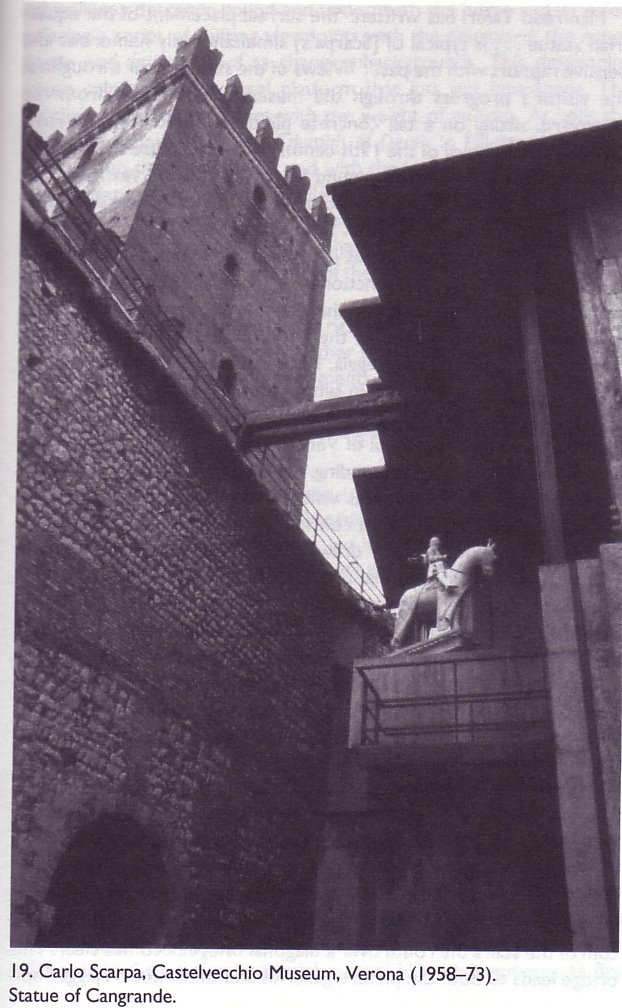
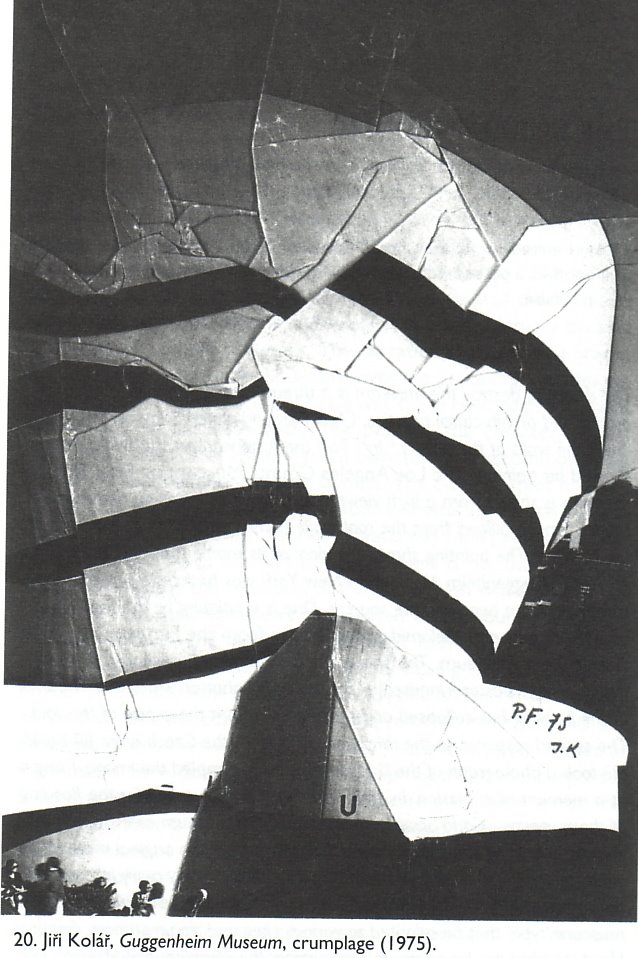

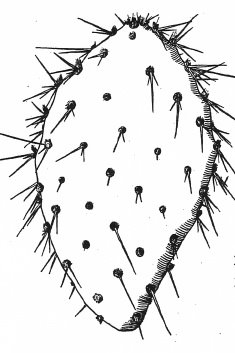
A couple of illustrations from The Delirious Museum

Peter Campbell referred to this book in his LRB column
(London Review of Books, Vol 28 No3 February 2006) :

The designer Calum Storrie has just published a book called The Delirious Museum. His starting point is the belief that the museum should be a continuation of the street – as easy to enter, as amusing to pass through. This concept is possible in Britain where we have no museum charges, but the notion that streets have a lot in common with museums – and that the pleasures and interest streets offer may be greater – has a history which parallels that of Modernism. The delirious museum Storrie assembles in his imagination runs together the domain of objects caught in the museum net and that of objects which still float free. Primary texts are those in which Baudelaire and Benjamin describe the flãneur's disengaged observation of the city's unfathomable complexity.
The richness of the street points up shortcomings in museums. In one strand of Modernism, artists were, and are, at war with them. Although this antipathy is on the face of it slightly puzzling – actors seem happy enough with theatres and writers with libraries – reasons for it aren't difficult to find. Duchamp proved that by exhibiting an object you can make it into a work of art. But it turns out that display can also take the acid out of protest. Artists have learned to live with the museum's tendency to impose and change meanings; even when angry they no longer call for the wrecking ball. Instead of destroying museums, dissenters, as Storrie describes them, set out to parasitise and subvert them. Duchamp sidestepped the museum when he distributed multiple sets of miniatures of his work, packed in suitcases. Chris Burden's Samson attacks (or at least pretends to attack) the bricks and mortar. His piece consists of a turnstile, a winch, worm gear, a 100-ton jack, timbers and steel plates, designed to be placed in the entrance to a museum. Visitors passing through the turnstile drive a glacially slow extension of the timbers which, in theory, threaten to knock down the walls. When it was shown in Newport Harbour Art Museum, the fire department was alarmed. In Vienna in 1996 a document was issued which explained that there would never be enough visitors for the machine to do its worst.
Inanimate things in museums – teacups from which no one drinks, pictures which will never again be bought and sold – can, as much as stuffed animals, make one think sadly of the time when they were alive. Modern curators know this and spend much time and money avoiding notions of dust, death and mummification. Even art museums do not cram everything in the reserve collection onto the walls. But in avoiding the confusion, heterogeneity and abundance of old–style museums like the Pitt Rivers in Oxford, some of what they shared with the street has gone: an ability to feed the imagination with unexplained, comical, sinister and melancholy juxtapositions, for example – the aspect of collecting the Surrealists exploited.
Storrie is good on the relation between spaces and things exhibited: on Carlo Scarpa's museum designs, in which windows may bite a top corner out of the walls and ceiling of a room and pieces of sculpture may be positioned to become part of the building, and the intricate interlacing of objects and architecture in the Soane Museum – all of these are striking alternatives to the tradition of the plain room that culminates in white, evenly lit operating-theatre-like spaces. They are still the norm when new rooms are built for notable collections. Storrie's commentary on the work of Daniel Liebeskind and Frank Gehry shows how their most acclaimed buildings – Liebeskind's Jewish Museum in Berlin and Gehry's Bilbao Guggenheim – achieved presence not by complementing collections but by taking over from them the job of engaging attention.
The contrast between the vivacity of the street and the quiet of the museum is not always to the advantage of the street. The Musée Carnavalet is devoted to the history of Paris; it was founded at Haussmann's instigation at a time when he was supervising the demolition of much of the city. The building was once the home of Madame de Sévigné, and the ad hoc run of rooms with 17th and 18th-century panelling and furniture and a collection of mainly unremarkable portraits causes you to exercise your historical imagination. A collection of striking pieces would be more glamorous, but might not force you to think as hard. If a museum makes it too clear how you are expected to respond to things and if displays are cut down to what can be digested easily, there is less to wonder at and be curious about.

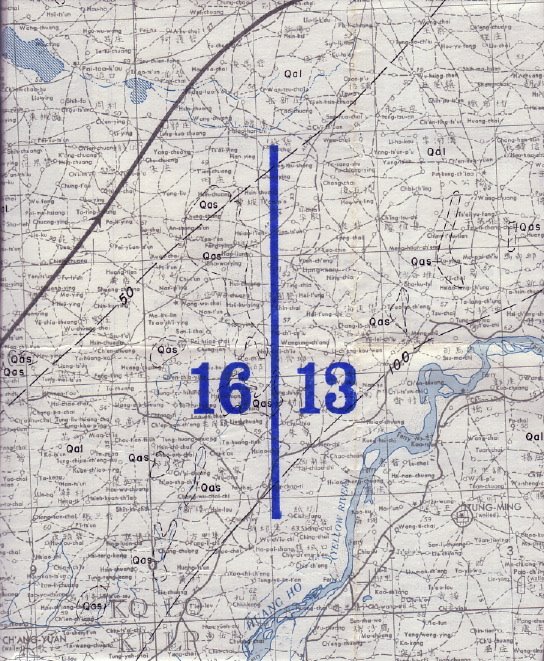
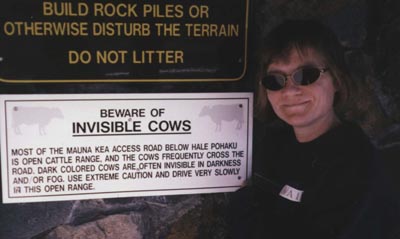
27.5.06

Tinfish Trout


I've just received my subscription copy of Tinfish magazine. This is issue 16 and it's a special collaborative venture with the Aotearoa/New Zealand and Pacific Islands journal Trout.
Tinfish is edited by Susan Schultz. It collects poetic writing from the Pacific Ocean region stretching right acoss to East Asia and always provides an eclectic and original read. Every issue has amazing artwork designed by Gaye Chan.
Trout is an online journal of arts and literature, based in Auckland and edited by a quartet - Brian Flaherty, Anne Kennedy, Tony Murrow and Robert Sullivan. A collaboration of these magazines seems inevitable given their similar editorial bents. There are 81 pages packed with great poetry and off-beat imagery.


Susan Schultz, on the look out

My Dream A Reading With Susan In NY NY

Hawai'i-based poet Susan Schultz is reading on the U.S. mainland this coming week. I wish I could hop a rocket to this event -

Susan M. Schultz has taught at the University of Hawai'i since 1990. She is the author of the books Memory Cards & Adoption Papers and And then something happened. The University of Alabama Press recently published her collection of essays, A Poetics of Impasse in Modern and Contemporary American Poetry. She edits Tinfish Press.

Susan M. Schultz
Mark Wallace & Stephen Vincent

on
Wednesday, May 31, 8:00pm.
at
The Poetry Project
St. Mark's Church-in-the-Bowery
131 East 10th Street at Second Avenue
New York City 10003
Trains: 6, F, N, R, and L.
info@poetryproject.com


Admission is $8, $7 for students/seniors and $5 for members (though now those who take out a membership at $85 or higher will get in FREE to all regular readings).

We are wheelchair accessible with assistance and advance notice. For more info call 212-674-0910.


13.5.06

Three poets and a CD


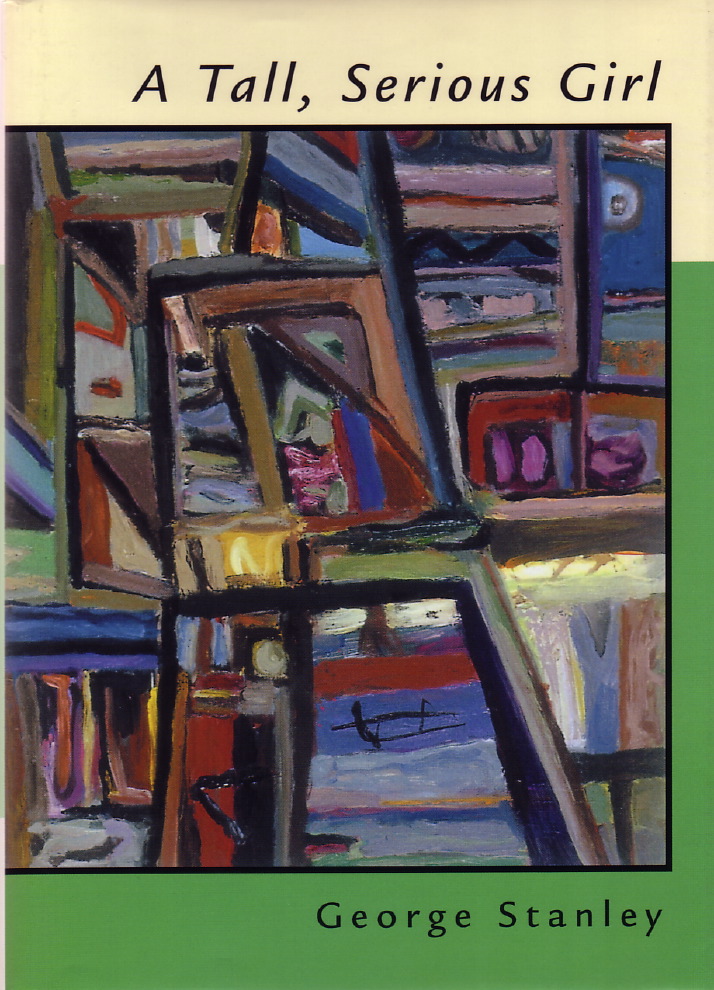
I've been reading A Tall, Serious Girl - George Stanley's selected poems from 1957 until 2000, published by Qua Books in 2003. This poet was brought to my attention only early last year by Australian poet Michael Farrell. The title of this book is from George Stanley's beautiful poem Veracruz - 'I wish my father had, like Tiresias, changed himself into a woman,/& that he had been impregnated by my uncle, & given birth to me as a girl./I wish that I had grown up in San Francisco as a girl,/a tall, serious girl'. George Stanley was born and raised in San Francisco where, in the sixties, he was part of the San Francisco Renaissance which included Robert Duncan, Robin Blaser and Jack Spicer. He moved to Vancouver in the seventies where he became associated with New Star Press, and The Grape (an underground newspaper). He has been active in Canadian politics, unions and alternative media. Two other books are Gentle Northern Summer (New Star, 1995) and At Andy's (New Star, 2000). A Tall Serious Girl has an interesting detail - the text of the poems marks his move from the USA to Canada via a change in spelling. His poems are proof that a straightforward approach can accommodate a sense of mystery. George Stanley lives and works as an English teacher in Vancouver.


Here is one of his descriptive poems that I like -

Poem Enclosing Its Dedications

& now I'm looking at someone
in a t-shirt, who comes out of the shade
of his apartment & wags his fingers, briefly,
against the steel frame of his glass door
so they flash white, in the sun.

The sun makes the apartment building opposite
reflect the light, off its paint,
dirt-streaked.

Two trolley poles skim past (the top halves).
The wires sway
    for Judith Copithorne & Daniel Ignas
The hemlocks or firs or whatever move slightly
in the breeze
    for Renee Rodin

Another man in a t-shirt gets out of a grey car
(I don't know the names of things -
trees, makes of cars).
The blue sky says nothing,
but what would you expect it to say -
do you think that behind it there are wheels ?

A man with a yellow shirt & a
yellow cap. A blue truck. If I don't know
him by name why should I know the truck's
family ?
    for Barbara Munk

A lyric poem.
A man in a brown vest & a t-shirt
carrying a plastic Safeway bag.
The traffic signal sways.
     The blue sky means the sun
is warming Vancouver.
     Another bus,
this one going west, to Dunbar or UBC,
so I can see the full length of the poles.

Maroon car. Man in blue jeans & grey
sweatshirt & black helmet on a bike. Another
guy on a bike. Woman with raspberry red coat
walks up old concrete steps with a Safeway
bag.
  Red car.
Cherry red. Wild cherry.

Four people, one pushing a bike.
Green sweat, white helmet.

Man sits at desk, looks out window at
cream-coloured apartment building, parked cars,
conifers he doesn't know the name of, only
they're conifers cause he can remember them
greenblack in winter - at trolley wires &
thicker black (hydro?) cable, sometimes birds
sit on, crows, pigeons -

old '20s 2-storey gable-roofed house on
Trafalgar, Avalon milk truck, blue
sign of Westside Ski & pink sign of
Montri's restaurant
& blue sky all behind this. Sky blue.
Sits writing poem. Wowowowow of ambulance.
Stops.
   Stops writing. Poem goes on, world goes on.


Stan Persky writes - 'Sometime around the beginning of the new millenium, the poet George Stanley half-jokingly invented the idea of 'aboutism.' Among other things, aboutism proposes that a poem is or should be, after all, about something, as contrasted to the contemporary poetries of linguistic abstractionism or anecdotal significances framed in verse. In his book At Andy's Stanley's poems are described (in a back cover blurb) as being 'about movies, ballparks, hockey, dogs, sex, aging, trips to Calgary and Veracruz, Ireland and Scotland, his return to Terrace, British Columbia, where he lived for fifteen years...' You can continue reading this piece.

Barry McKinnon interviews George Stanley.
Listen to George Stanley reading.


In the past week I also read a couple of chapbooks on my early morning trips across town to my job. One that has a direct quality similar to George Stanley, is Cassie Lewis's Bridges.


This is a long prose-poem. It was published by Ralph Wessman's Walleah Press in Hobart, Tasmania. Cassie is an Australian poet who has been living in the USA (currently in Rochester, NY) for some years now. The poems in Bridges calmly consider the small wonders of the quotidian that comprise the challenge of relocation - from country to country and from west to east. Here's an extract -


I wake up slowly as I gather the tea things.

A body stirs, a small tin cooking pot on a gas flame. Outline
of an arm against a flickering curtain, yellow linen. Rolling
my body under the curtain's yellow gauze. Is it morning ?
Then I sleep.

Light crawls across the campsite. Is this still my dream ? I
shadow myself like a tree. I crouch down wrapped in
shadow.

Soft eyes fluttering against cotton. It is beautiful to know
such textures: linen, eiderdown. The luxury of piled up
leaves to pee on.

'If you stay here any longer you'll become a mystic.' Ha ha.
I smoke an imaginary pipe as a witty gesture against this.
No one laughs.

I turn to bake in the sun of my own volition.

      *      *     *

Cassie Lewis has several other publications and she keeps a blog.


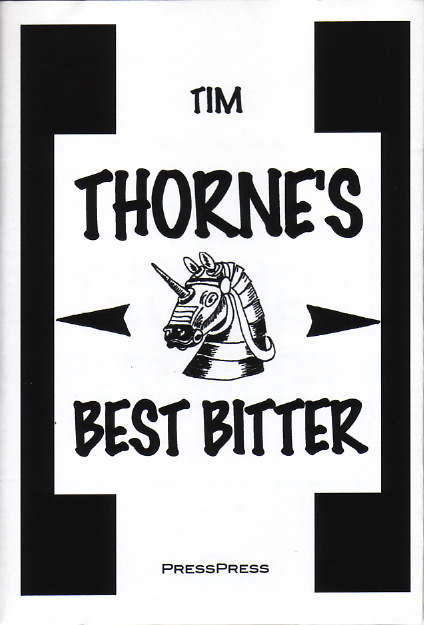
Tim Thorne's chapbook Best Bitter was produced by Chris Mansell's PressPress which has published, from Berry, in regional New South Wales, a number of great pocket-sized chapbooks. Tim lives in Launceston, in northern Tasmania. His cover blurb says he is 'a force in Tasmanian poetry and an icon of Australian poetry'. True. For many years Tim Thorne co-ordinated a legendary annual poetry festival in Launcestion that eventually grew into a showcase for contemporary Australian dance as well as poetry. His writing is always gritty, witty and trenchant. He is definitely opposed to the war in Iraq. Here's one of nine poems grouped as Mesopotamian Suite -

Fallujah Face-Off, April 2004

Scared teenagers steal hubcaps
off the war machine and know
only religion and danger.
There hasn't been time to learn
the history of last year's war,
let alone of this year's peace.
They cannot trust their officers
but they can be sure of Allah and of pain.

Across the two-lane blacktop
Justin Timberlake and Britney Spears
stand wide-eyed in battle fatigues
on a flat desert page from an atlas
they never opened. The flag and the music
provide the substance of their faith.
Their weapons are heavy but they get
regular e-mails from their pastors.

Alongside the road runs a pipeline
full of thick, black democracy
at $40 a barrel. It is oblivious,
having been dead for millions of years.


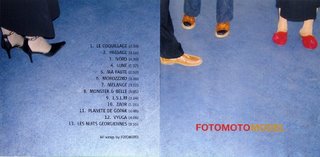
While I've been typing up today's blog I've had Model by Ukrainian electropop group fotomoto rocketing along on the CD deck. I love all nine minutes of the pacy track Les Nuits Georgiennes


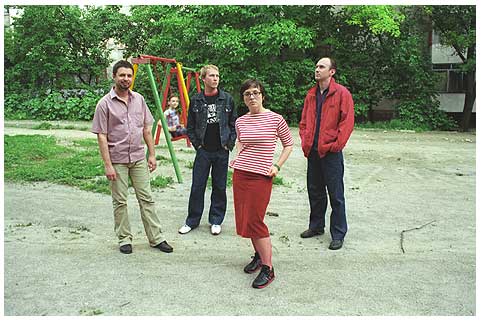
FOTOMOTO are (from left to right): Sergey Sergeyev instruments; Anton Singurov instruments;Olya Volodina vocals; Alexander Ivanov programming.


7.5.06

Two Book Launches in Sydney in May


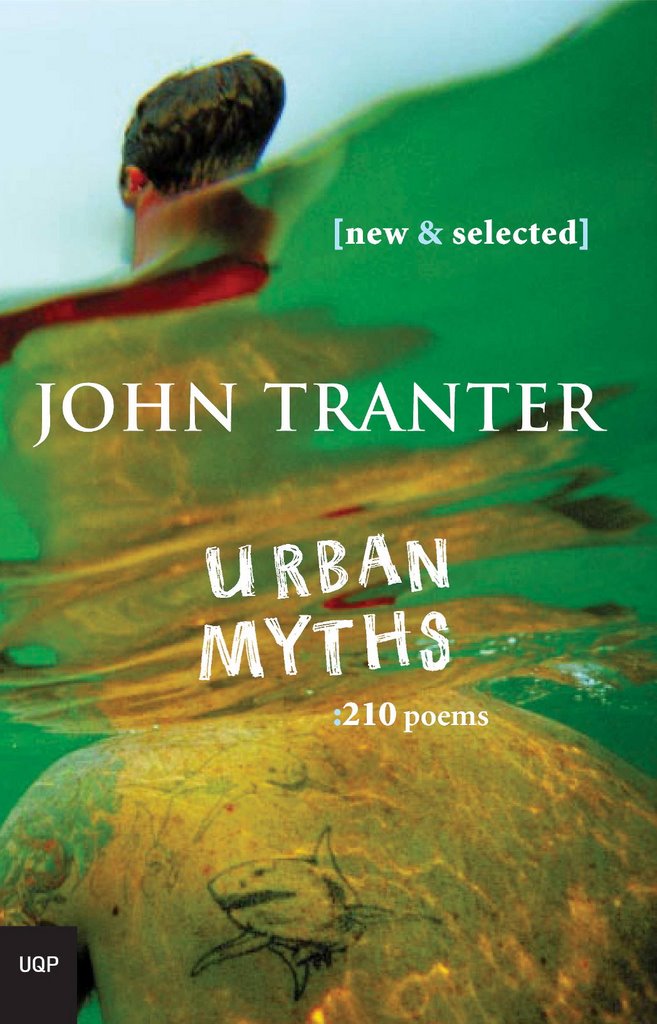
John Tranter
Urban Myths: 210 Poems
New and Selected


University of Queensland Press
2006, ISBN-0-7022-3557-1
paperback


To be launched in Sydney by Pam Brown

at Gleebooks,
49 Glebe Point Road,
Glebe NSW 2037,
on Friday May 19, 2006
at 6 for 6.30pm.
Free and open to all.


To reserve a place or buy the book visit Gleebooks.

* * * * * * * * * * * * * * * * * * * * * * * * * *


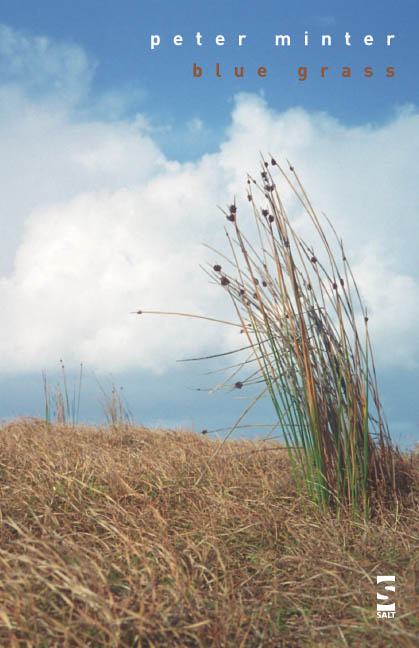
Peter Minter
blue grass


Salt Publishing (UK)
2006 ISBN-1-847712-46-2
paperback.


To be launched in Sydney by Pam Brown

at Bangarra Mezzanine,
The Wharf,
Hickson Road
Sydney Writers Festival,
on Friday May 26, 2006
at 6 pm.

Please come along and share a drink
to help set this new book to the wind.
Everyone welcome.

For more information or to buy the book visit Salt Publishing


2.5.06

Ken Bolton in Sydney


Ken Bolton
is reading this week at
Berkelouw's Bookshop,
19 Oxford Street,
Paddington.
on Thursday 4th May at 7pm

$5 entry buys a wine or coffee/tea


Ken reads in Sydney only rarely so this opportunity to hear a terrific Sydney-poet-who-has-lived-in-Adelaide-for-over twenty-years is one not to be missed. His recently released book At the Flash & At the Baci was The Deletions' book of the month for March. Local poet Mark Mahenoff will also read on Thursday. The Elbow Room reading series is co-ordinated by Greg McLaren.

1.5.06

May Day


1st May
May Day - a day to continue and to commemorate workers' campaigns for workplace rights.
I am a member of the CPSU
Community and Public Sector Union


29.4.06

Listen up

This issue of Meanjin magazine - Blak Times has been edited by Peter Minter, poet and lecturer at the Sydney University Koori Centre. It is chock full of apposite, informative and powerful essays, interviews, stories and poems by and about Australian Indigenous writers, visual artists, critics and musicians. It has a sixteen page, full colour spread of artworks and stills from recent films.
From Peter's introduction: In the late twentieth century, settler Australia was reminded more vigorously and effectively than ever before of colonisation's exploitation or annihilation of Indigenous communities. This was not simply the result of an awakened post-colonial social conscience or a renewal in civic moral virtue. It was driven rather by a resurgence in many Indigenous cultures after generations of physical and psychological warfare. Australia was asked to take notice, listen up and come to terms.

Blak Times is a crucial collection. I'm selecting it as my imperative reading for April


23.4.06

Attention Span


Steve Evans, professor of poetry of Main Street (Orono) Maine, has begun putting the 2005 Attention Span up on the web. I've been pleased to accept Steve's invitation to participate for the past three years. My list of titles for 2005 can be accessed here


22.4.06

An illustrated lament

'Acme Demolitions - All We Leave Is A Memory'


After work last Thursday I had arranged to get picked up by Amanda Stewart on the corner of City Road and Cleveland Street just outside The Seymour Centre to go see and hear the sound installation Sign she had made for 'What Survives' at The Performance Space in Redfern.


                 Amanda Stewart, April, 2005

What Survives: sonic residues in breathing buildings is about just that and takes its title from a poem by Rainer Maria Rilke in which he asks 'Who says that all must vanish ?' So it's about traces that resonate, in the case of sound, within buildings, bridges and architectural spaces.


                 My shadow walking - thursday arvo 20.4.06

I walked across the university campus past the hole in the ground that was once the Stephen Roberts Lecture Theatre where I had heard visitors to Sydney like the philosopher Jean Baudrillard and Gayatri Spivak speak. It was the venue for conferences on topics as diverse as Artificial Intelligence and the Kanak struggle for Independence in Nouvelle Caledonie and so on. The theatre was once packed out for popular palaeontologist Stephen Jay Gould. The only traces of that place are now either dust or memory particles.


Then I crossed City Road and was shocked to see another demolished, empty area where The Tin Sheds had stood only a few days ago.


   The Laughing Wall by Colin Little and Alex Danko - The Tin Sheds fence in 1972

The Tin Sheds, so-named because of its corrugated iron walls and roof, was built originally for the CSIRO (a government funded sciences organisation). By 1970 though, it had become an extraordinarily eclectic art workshop owned by the University of Sydney. There was, over its thirty odd years, far too much happening there for me to cover properly in this outline so I'll just note some (but by no means all) of my own connections.
In late 1971 Colin Little, an Engineering dropout, began screenprinting at the Sydney University Art Workshop with the assistance of Vicky King. He established the Earthworks Poster Company and formed a close association with the artists of the Yellow House, Potts Point, Sydney. (The same year, 1971, I had made a sculpture at The Yellow House as part of a women artists' project co-ordinated by Vivienne Binns)


In 1971 I had a silk screen printing workshop in Glebe Point Road, Glebe called Cocabola's Screenprinting.


         Pamela Cocabola Brown pours a cup of thinners solvent for Di Fuller outside Cocabola's Screenprinting. Glebe, 1971

I would walk across Victoria Park with my screens to the Tin Sheds to use the darkroom there. I became friends with Colin Little who was not only a great silk screen artist but also the first vegetarian, Tai Chi practitioner I had ever encountered. Colin's company changed its name to Earthworks Poster Collective in 1972. The late Mitch Johnson, Tim Burns, Mostyn Bramley-Moore and members of Optronics Kinetics worked with the collective as did members of the Architecture School and people from the community at large.

In 1974 I co-edited with poet Nigel Roberts, artist Tim Burns and publisher Dave Morrissey A Package Deal Assembly Book based on the assembly books produced in the US by Richard Kostelanetz.The catch phrase was 'Every contributor will be a distributor'. Sixty poets and artists each produced 1000 pages of a work and Colin Little quickly screened a cover on the day of collation at the Tin Sheds. Poet John Forbes was still printing his contribution in the bottom shed as we were assembling the rest of the book in the middle shed.(There was often a kind of immediacy to pursuits in art in those days.)


Chips Mackinolty a student (and son of the Dean of Law at Sydney Uni) joined Earthworks Collective alongside women like Toni Robertson, Jan Mackay and Marie MacMahon. They each produced some wonderful political posters.


May Day Palace Revolution Ball. Chips Mackinolty 1977

Sadly, in 1979 Colin Little died from lymph cancer thought to be caused by the chemicals then used in the screen printing process and possibly the lack of ventilation in the screen printing shed.

Later another screenprinting group,that had started in Wollongong, a mining and steelworks city on the coast south of Sydney, became part of the Tin Sheds collective. They were Redback Graphix. Michael Callaghan was prominent in Redback.

Throughout 1976-77 I was a member of an anarcho-feminist theatre group, the Lean Sisters, that performed political comedies at The Tin Sheds. The group's members included poets, lawyers, political activists, journalists, teachers, musicians, painters and two actors. We developed the scripts, sets, the entire productions collectively which, looking back now , was an amazing feat. All money raised from ticket sales went to womens' groups like, for example, the Elsie Womens' Refuge in Glebe. One show, The Poetry Water Gossip Show, involved assembling an above ground swimming pool and a diving board in the middle shed. Every performance in that show took place in the pool.


Lean Scenes from The Leans Lurch Left and The Crunkboonk Xmas Show at The Tin Sheds, 1977. (photos by Helen Grace)


Lean Sisters Micky Allan, Frances Budden and Diana Fuller painting the set and prop-making, Glebe, Summer 1977.

At the Sheds there were also annual Xmas Eve celebrations with bands like 'Mental as Anything', 'Sheila' and 'XL Capris' called 'Xmas-Is-False-Consciousness-Dances' where many a romance began or ended. There was the annual Anarchist Fete on the lawn behind the Sheds (a space now occupied by a portable that houses a departmental IT group), art classes, poetry readings, discussions of contemporary art practise, 'art + language' expositions (Ian Burn and Terry Smith) exhibitions and much more at the Tin Sheds. The university tolerated some of the oppositional activities of the artworkers and continued practical courses for arts students throughout. In 1979 I participated in Micky Allan's community photography project at the Tin Sheds and their component of the annual Chippendale festival involving the Redfern Indigenous community. The following year, 1980, I taught courses in Super 8 film-making there. The Tin Sheds had various directors over the years including Joan Grounds, Peter Kennedy, Louise Dauth and Martin Munz. It was the hub of Sydney counter-cultural culture. You can read more about it in The Tin Sheds - Under a Hot Tin Roof: Art, Passion and Politics at the Tin Sheds 1969-1994 by Therese Kenyon. (Published by State Library of NSW Press with the Power Institute of Fine Arts)and listen to a radio program about the Tin Sheds here.


Of course, last Thursday afternoon, I did already know that the Tin Sheds gallery had closed a couple of years ago and had been recently re-invented as an official venue in the Wilkinson building that houses the Sydney Uni Architecture Department just down the road, but to suddenly come across an empty space where an important cultural site had stood only a few days earlier was, for me, a shock.

By the time I arrived at the corner where I was to wait for Amanda's car I was in a strange state - feeling sort of bereft, I guess, and definitely feeling that this was far too much irony for one afternoon. I'd like to affect being a flâneuse but in Sydney it's impossible. Next I found that corner also undergoing demolition.


Later, to my relief, we found that The Performance Space was still standing with various mostly-abstract sound pieces installed throughout the old building's galleries on the ground floor and the theatre intact at the rear.


An update from 2010 - The Performance Space no longer exists. A few years ago it moved and was re-named Carriageworks, housed in a vast section of the old Eveleigh Railway Workshops at Redfern


20.4.06

Sub heading of the day


This week's printed-in-Sydney edition of The Guardian Weekly has the headline Scramble is on for Arctic oil but perhaps it is the sub-heading that might seem perturbing to readers -

Britain and US in conflict over plan
to exploit fossil fuel below melting ice


18.4.06

Two booklets


My Lightweight Intentions was first published in Cambridge, U.K. by John Kinsella's imprint Folio (Salt) in 1998. Never-Never Books reprints this 23 page C5 sized chapbook of poems from the late 1990s with a cover photo that I took in the Graffiti Tunnel at Sydney University in late February this year. Here's a sample poem.

 This & That
(I cite myself)


Resting like a relic
in a field of meaning -
push the rocks around
for transformation -
gravel rash, scab, scar,
all
factors that
fall squarely.
(like that)

those well-known codes -
public-private continuum -
a surveyor's tripod clacks -
the laneway, reduced
& framed,
is picturesque -
even the rubbish
appears artificial.

casual citations
accumulate,
ballooning
empirical tactics -
o no it's
an index of anecdote

the hypermarket
surveillance camera
attempts its capture -
my nearly-beautiful
every dream,
my artificial memory
daily.

disease, elusive entity,
slithers.
pale gloved hands,
yet HIV negative.
the milky
ampoule's contents
swallowed -
waste management, the nightclub.

sleepless in a townhouse,
hours of
zonelessness.
(like this)


Peel Me A Zibibbo is a group of recent poems - five poems written for friends. It's a 14 page C5 sized chapbook. Here's the title poem -

 Peel me a zibibbo

I could go
in any direction
but it's best that here and now
I remain lesbian,
keep my vanishing cream
sealed.
I'll go south
eventually
to follow the sheen
of your signals,
in the meantime
my problem's like how to
design a wall didact -
serif or not's
a big decision

*

it's October so
the bogong moths
are back
and the koels - the October
crack of dawn racket -
are back again too,
mauve jacaranda petals
are stuck
on the windscreen wipers rubber

*


by now the wall text task
is impossible -
application decreasing,
attention span diminishing -
transparency an aim,
how coded the coding

*

imperfection in kindness
comes with the void,
you need to
choose
the 'I'm feeling lucky' google option

*

drinking in the cemetery
sounds like an early
Nick Cave song
but it's
something-to-do,
it's also the subject
of Paddy Fordham's
drawing

*

should I start carrying
my books
in clear plastic bags
inside
my polyester document bag,
is this a solution ?
16° centigrade
95% humidity
what a precipitate place

*


shouting Shakespeare aloud
to the sea
in Surfers' Paradise
in 1964
after hurling your body down
fine off-white sand dunes.
now it's 2006
you're experiencing thanatos
high up on a Seidler balcony.
if you are in doubt
(slurp over drinks)
what gives the false poet
such confidence ?

*

awake and refreshed
tho with nothing on the page

*

John T phones -
this cloudy gloomy
early summer day
is 'like the fifties' he says.
every day ?
miserable childhood ?
photographic weather memory
à la recherche du temps inclément

*

I was reading
about the sweet potato farmers
of Osaka
living such long lives -
nonogenarians, centogenarians -
when Kurt called in with his new book
Hyper Taiwan
Taiwan - it's 'sweet potato island'

hi Kurt, hi John T,
hi Nick, Paddy, hi Shakespeare,
peel me a zibibbo
would you,
one of you guys ?


Never-Never Books PO Box 55 Rose Bay NSW 2029 Australia


17.4.06

In the transit lounge


do not sit on your feet
do not unfreeze
do not unfreeze
is this my soundbite
roger wilco
can concepts dim
if you forget
that you've forgotten
where are you off to
please excuse
my english
pacific palisades
sounds like paradise
what to do
if the pilot
turns blue
over and out


14.4.06

Dance


Bangarra Dance Theatre's latest show Gathering at the Sydney Opera House last night was another engaging performance. The embattled telcom Telstra recently cut their funding sponsorship of Bangarra. The Australian Ballet then invited Bangarra to combine with them for a show. The Australian Ballet is currently sponsored by Telstra. A canny move, but I'm not sure that it was a good move on every level artistically.
David Page, Bangarra's usual composer, collaborated with Elena Kats-Chernin on the score for the first piece Amalgamate. Bangarra doesn't usually work with a pit orchestra and David's music, in previous productions, has always been an inventive mix of traditional indigenous music and contemporary electronic or studio-based composition and sampling. Elena Kats-Chernin's more conventional score was very uninspiring. At times it sounded like a cross between 50s musicals like 'Showboat' or 'Oklahoma' (and then very muddy) and television themes like George Dreyfus's music for the old 60s Australian tv show 'Rush'.
The Sydney dance critic, Jill Sykes, described Kats-Chernin's score as 'sounding mushy, like Mantovani strings'. David Page hardly got a look-in. So his brother Stephen Page's choreography became increasingly merely illustrative of the poor score as the piece progressed and finally Amalgamate looked like a dancer's exercise in style. What a disappointment.


Scene from Amalgamate

Fortunately, the second half of the bill was terrific. Rites was commissioned nearly ten years ago by the then director of the Australian Ballet, the late Ross Stretton. He asked Stephen Page to create a work to Stravinsky's The Rite of Spring. It premiered in Melbourne in 1997 and toured to New York in 1999. This time, again in combination with dancers from the Australian Ballet, it was a fast, mesmerising and very beautiful work that is what, as a regular at their shows, I've come to expect from Bangarra's powerful performances.


It's GOOD Friday and all the shops in this neighbourhood are doing a roaring trade in chocolate eggs and hot cross buns when once they would have been closed to observe this Christian holy-day. Heathens R us. I am happy to have received this little easter message


11.4.06

Art plus

In case you thought The Deletions was merely an apolitical lifestyle-and-entertainment aperçu into a blissfully apathetic and placid cyber resort then I should let you know, right now, that it isn't. In a small bloggy way I am looking to represent the cultural activities of my own community of friends and acquaintances whose projects give positive examples of how to continue all kinds of art practice in the face of dark times.


A digital video that is a critique of power, meaning and subtext in the language of global politics in this era of permanent war is Kate Richards and Sarah Waterson's project subscapePROOF.
Installed at ACMI (Australian Centre for the Moving Image) in Melbourne last year, it is now showing at d>art 6. Viewed via a periscope this is an experience which concentrates your focus and limits distraction as you, the audience, enter a multi-layered digital subtext.
'sub_scapePROOF' critiques the notion of evidential, superficial 'truth' in a post-faith age. By mapping philosophy and corporate data back onto the language of superpower politics and western, pathological tropes of fear and anxiety, 'sub_scapePROOF' generates a playful and ironic critique on the traditional politics and power dynamics of knowledge-through-mapping.
By playing on the emergent aesthetic and sense-making behaviours of the datasets, by using the dynamics of turbulence, balance, recursive effect and pattern formation in the data, sub_scapePROOF transmits an affect of 'truth' more baroque than Cartesian, and 'meaning' more symbolic than fixed.
The piece uses my own poem 'Every American Wins A Prize'.

when: wednesday april 12, 7 pm
at: the Studio, Sydney Opera House
what: "sub_scapePROOF - a machinima"


This is a 5 minute video output, recorded from Kate and Sarah's software project
sub_scapePROOF. You can view it in process at the sites -

http://www.subscape.net
http://www.dlux.org.au/dart06/screen.html#17


Kate Richards is currently in residency, with Martyn Coutts and computer programmer Jon Drummond, to spend the month of April working on a project called Unidentified Industrial Accident at the Performance Space in Redfern, Sydney.


Multi media artist Kurt Brereton is having a small solo show
of some selected works from The Vanuatu and Chronography series

8.4.06

Singers


Kate Fagan, poet - author of The Long Moment, editor of the online journal How2 (contemporary innovative writing by women) and singer songwriter will be launching her CD Diamond Wheel at the Vanguard on King Street in Newtown, Sydney at 9pm this coming Wednesday 12th April. For a preview you can listen to Kate on Lucky Oceans The Daily Planet music show on ABC Radio National this coming Monday 10th April


This Saturday arvo we are listening to Lagrimas Negras - black tears. Cuban pianist Bebo Valdes and Spanish gypsy singer Diego El Cigala. It is intense and beautiful.


2.4.06

Music


Ruby
This weekend we're listening to Ruby Hunter and Archie Roach with Paul Grabowsky and the Australian Art Orchestra.

1.4.06

Weekends

It looks as though I'll be adding to The Deletions on weekends. It might become a kind of record of events around Sydney as well as news on books and some actual live poetry.

Tomorrow morning, Sunday 2nd April, I'll be attending a film premiere at the Palace cinema in Leichhardt.

Film Australia announces the release of a new animation The Safe House, which tells the story of a small girl's mysterious association with the Petrov Affair of the 1950s.


Writer/director of The Safe House is award-winning animator Lee Whitmore, Denise Haslem is producer, and Anna Grieve is executive producer.

The Safe House continues Lee Whitmore's autobiographical and hand-drawn approach developed in her earlier films Ned Wethered and On a Full Moon. It is based on a true story from Lee's childhood when the lead characters from a real-life spy drama moved in next door. The lead characters were the Petrovs. It is the summer of 1954 and seven-year-old Lee and her friends are drifting through the holidays, exploring their quiet suburban neighbourhood where nothing ever seems to happen... until the day mysterious strangers move in with the old lady next door. No one explains the odd comings and goings, the big black cars, the men in suits and hats, the overheard snippets of conversation, but that does not stop the children from imagining. The Safe House is a half-hour animation giving a young girls innocent perspective of one of the most talked about moments in Australian history - the spy drama known as the Petrov Affair.

Film Australia is a Federal Government-owned company which supports production and distribution of documentaries in the national interest. They say - "Animation is notoriously difficult to finance in Australia and Film Australia thanks our partners in The Safe House, SBS Independent, for supporting such an interesting project." (SBS - Special Broadcasting Services - is Australia's national multicultural TV and Radio broadcaster).

You can find some information on the Petrov Affair and the Cold War era in Australia from an exhibition at Old Parliament House in Canberra.


Last Wednesday evening I went along to Gleebooks to hear Carolyn Burke talking about her new biography of the photographer Lee Miller, famous for her photographs of the Nazi concentration camps, the London Blitz and other places during the second World War. Carolyn is the author of an earlier biography of the modernist poet Mina Loy. I first met Carolyn when I introduced myself to her at yet another event at Gleebooks in November 1995. I had been interested in Mina Loy for a long time and, surprised though I was to notice that her biographer was actually in Sydney, I thought I could interview her about the book and about Mina Loy. A few days later, we met in a tiny flat in King's Cross and made an interview - with no prospect of actually publishing it (I tried several Australian literary journals to no avail). It has subsequently been published in two web magazines and here on my own site.


Carolyn Burke and eclectic gardener Denis Gallagher at 'Dumbi Dumbi', Denis's home in Blackheath in the Blue Mountains (115 kilometres west of Sydney) in January 2005.

The Lee Miller biography (which I am yet to read) has two very different covers. The U.S. version is melodramatic. The U.K./Australian cover is a soft-focus Man Ray portrait that, although revealing Lee Miller's extraordinary beauty, lends a gentility that seems to want to tone down a woman more known as a kind of tomboy-femme-fatale, brilliant photographer and genuine enthusiast for living.


US cover image


UK-Australia cover image

For further information and a short interview with Carolyn Burke on Lee Miller visit the publishers Random House and Bloomsbury


The Minneapolis-based poet Lyle Daggett has sent me a comment on his interest in Mina Loy and Lee Miller. He has kindly sent the url for the Lee Miller archive. Thanks Lyle.

26.3.06

Good morning


Good morning.
I'll begin a regular post. Towards the end of every month I'll nominate the poetry book that I most enjoyed or was most impressed by in the previous few weeks. So here's the book for March.


Recently, I wrote a poem for Ken Bolton,
as an attempt at writing about his new book.
I used a long discursive, rambling method to
resemble his style (not as successfully as Ken
does - but he's been writing long wide poems
for over twenty five years - he knows what he's
doing)

I'm not certain how this will fit the blog template
so please use your big browser screen to read it.

For further information on At the Flash & At the Baci please visit Wakefield Press


Day and night, your poems

what else am I meant to be doing today
I can't stop reading your poems
the wind cools now through a gap
the sash window up a little
the windy air swirls, annoyingly, around my legs
I should put the window down
the day so bright grey and so breezy
saying summer's nearly over

I have only one hour spare
before I am to drive over to Fox studios
I can't stop reading your poems
I like the way you say 'coffee shop'
it's Australian never 'café'
nor 'bar' which is what you'd say in old Europe
where you take a coffee at a bar or bar tabac
not that what is said being 'Australian'
matters more or less, it's the way it sounds
that I like
I've said 'café' in a poem
just to set a neater rhythm
around thirty years ago I called a book of poems 'Café Sport'
after the Italian Caffe Sport in Leichhardt
though I'd never written anything there I'd drunk
innumerable espresso coffees brewed by Lucia
who kept the chess players' grappa
under the counter hidden from the law

*

there's the key at the door to the flat
the clockyclunky sound of the lock barrel turning as it opens
and Jane arrives, back from the city,
happy with the book she's bought
from the Language Book Centre
'Advanced French Grammar' by Monique L'Huillier
not much time to leaf through it though
and now no more time for your poems either
we're off to Fox studios Entertainment Quarter
to see a film

*

I couldn't stop reading your poems yesterday
and last night I finished them reading reading night and day
this morning I've placed the book on top of the portable tv set
next to this small table - the cover and spine remind me
of its pleasures
how you blend poetry and daily life
or, really,
how you mix thinking about poetry, thinking about everyday life,
like an easy interaction of light and geometry
setting an example or, even, a standard
for me - here in this poem I'm trying to write to yours -

it should be quiet here today
Jane's exercising in the pool at Easts club
I imagine her splashing up and down a lane
or standing in a gentle whirl of ripples
I'm here in the flat
at the laptop
again
a flock of Eastern Rosellas or Rainbow Lorikeets
or whatever those plump little coloured parrots are
are squawking in the fig trees outside
the roof man's here
blowing leaves from the building's gutters with a petrol blower
so - not quiet
as I wonder about that habit in contemporary poetry
you identify in a poem called 'Coffee'
how so many poets are fond of using the word 'blue' -
I'm guilty - cobalt blue, saxe blue, small blue view -
but I rarely say 'coffee' or 'coffee cup' in a poem
except for this one
my problem is that so many poets start with nature
I'm guilty there too
or another problem so many poets
write about politicians who are, really, as ephemeral as nature
I'm occasionally guilty
of passing mentions, snide - written in a fury

*

what do I remember ?
how many lines from the hundreds and hundreds, probably
thousands, of poetry collections I've read
and the poems submitted to the magazines I've edited ?
I sometimes think of some of yours -
'awake & refreshed
tho with nothing on the page'
can come to mind almost regularly these days
and, for me, a craved nostalgia in
'Rome's night air outside the window, spelling Rome'

'I don't have a Cruel Theory
in my body'
has become an in-joke between me and myself
'the terrific
days
of summer'
from earlier terrific days, and your poem 'Day & Night'
your Berrigan-dreaming drinks with friends
'I think continually of those who were truly great,'
someone said'
there it is now in the someone said
your poems to John Forbes
remind me to think of him and of his great poetry
and your living friends floating through your lines
they're signifiers, ne'er-do-wells in art'n'life and greats
participants all in an array of tasks and pleasures of, mostly, an intellect
that stays up that extra hour
so as not to miss the dawn
and to later amble down to Hindley Street
breathing in the pungent air of a coffee shop
opening for the day


25.3.06

Saturday arvo


So far, it's not clear to me how to get
this blogger technology to function smoothly.
But do blogees need to know this ?
Probably not.
No point in becoming prickly.